
If you’ve scheduled a medical marijuana evaluation and feel unsure about what to expect, you’re not alone. Many patients worry about paperwork, approval, or forgetting something important.
Do I need medical records? What if I forget something important? Will they even approve me?
In reality, the evaluation process is simple and efficient. State law requires a medical marijuana evaluation by a certified physician before you can legally use medical cannabis. This is not a lengthy medical exam or an intimidating interview. Most evaluations are completed in about 10 minutes.
The key is showing up with the right information. You do not need a lot of paperwork or years of medical history. You only need a few essentials that confirm your identity and help the provider understand your symptoms.
This guide walks you through everything you need to prepare for your appointment. No guesswork, just a clear way so you can feel confident going in.
What Happens During Your MMJ Evaluation

The first thing you should know is that this is a conversation, not an interrogation. When you log in to your session, you will meet with a licensed medical provider via a secure, HIPAA-compliant video link. They aren’t there to judge you, but to see if cannabis fits into your wellness plan.
The medical marijuana evaluation process is designed to be quick and focused. The provider asks about your health history and the specific symptoms you want to manage.
Throughout the process, your information remains private, protected by the same security standards used by major hospitals.
Once you understand how the evaluation works, the next step is making sure you are properly prepared.
What to Bring to Your Medical Marijuana Evaluation Appointment
The list of MMJ evaluation documents needed is actually quite short. You are not walking into a traditional doctor’s office where they ask for your entire medical history. In most states, the evaluation focuses on confirming two things: your identity and your residency. In most states, the evaluation focuses on confirming two things: your identity and your residency.
When it comes to medical marijuana evaluation ID requirements, the main item you need is a valid government-issued photo ID. A driver’s license is the best option because it typically shows both your photo and your current address on a single card.
Note: This is where things can get a little tricky. If your driver’s license shows an old address or an address from another state, you’ll need to provide additional proof of residency.
Acceptable proof of residency may include:
- A recent utility bill
- A current lease or rental agreement
- A bank statement dated within the last few months
Any document you use should clearly display your full name and current address. Requirements may vary slightly depending on state regulations, so it is always best to confirm local guidelines.
Your Photo ID
A current driver’s license is usually the easiest option since it shows your photo and address on one card. A state ID, military ID, or US passport also works. Your ID must be active and clearly show your date of birth, since some states only certify patients who are 18 or older.
Proof of Residency (Only If Your ID Address is Outdated)
If your license shows an old or out-of-state address, you will need a second document that confirms where you currently live. Common examples include a utility bill from the last 60 days, a current lease or mortgage statement, or a bank statement from the last 90 days. A screenshot of an online bill also works if your name, address, and the date are clearly visible.
A Device, A Connection, and A Quiet Room
The evaluation runs through a secure video link, so the provider needs to see and hear you clearly. A smartphone, tablet, or laptop with a working camera and microphone is enough. Pick a quiet spot where you will not get interrupted, and check your internet connection ahead of time so the call does not freeze.
A Few Quick Notes About Your Symptoms
You do not need a written report, but a few short notes help the conversation move faster. Think about when your symptoms started, how they affect your daily life, and what you have tried for relief. For example, “sharp lower back pain since 2021, worse at night, ibuprofen no longer helps” is far more useful than a vague statement.
Information You’ll Need to Provide
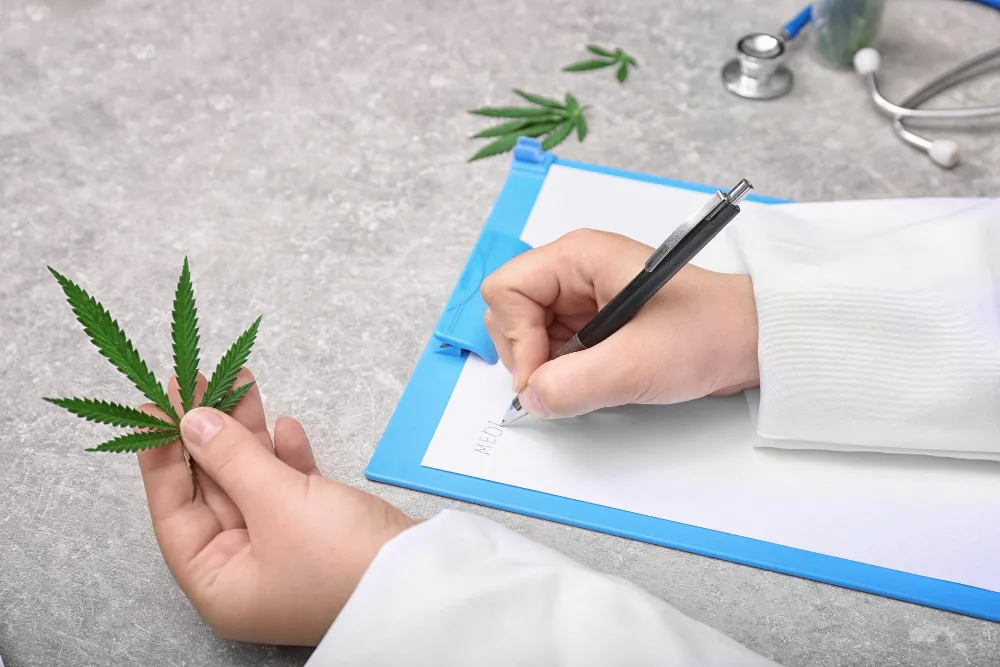
During your medical marijuana card evaluation, the provider’s goal is to understand your day-to-day reality and how your condition affects your life. You don’t need a formal diagnosis letter from a specialist. However, you do need to clearly explain your symptoms and their impact.
For example, if you experience chronic back pain, describe how it interferes with your sleep or ability to work. If you struggle with anxiety, explain how it affects your comfort or functioning in social situations.
The provider will also want to know what treatments you’ve tried in the past before considering medical cannabis. This may include over-the-counter medications, physical therapy, or other traditional treatment options.
Common qualifying conditions often include:
- Chronic or severe pain that hasn’t responded to other care
- Post-Traumatic Stress Disorder (PTSD)
- Persistent muscle spasms or epilepsy
- Severe nausea or wasting syndromes
Timeline: From Booking to Certification
Time is usually the biggest concern for patients. You might be hurting today and don’t want to wait three weeks for an answer. That’s where telehealth services help. Here’s a quick breakdown of the process.
- Booking: Scheduling your appointment is fast and straightforward. In many cases, you can find an available slot the same day you decide to sign up. The intake form is simple and typically takes about five minutes to complete.
- The Evaluation: Appointments are conducted online and usually last around 10 minutes. It gives the provider enough time to review your symptoms and ask a few focused questions.
- Certification: If the provider approves your evaluation, the certification is often processed immediately. Most patients receive their digital certification by email on the same day.
Why Patients Choose Online Medical Marijuana Evaluations
Telehealth has completely changed how patients access MMJ evaluations, especially in terms of privacy and convenience. People feel uneasy visiting a physical clinic where they might run into neighbors or feel judged.
Online evaluations remove that concern entirely. It allows patients to complete the process discreetly from home or even their car.
Affordability is another major reason patients choose online services. Instead of paying hundreds for an in-person visit, the process at MedCert is offered at a flat $79 fee, with no hidden charges or surprise processing costs. If the provider determines that a patient doesn’t qualify, the visit is fully refundable. It makes the experience completely risk-free.
Do You Need Medical Records for a Medical Marijuana Card Evaluation?
In most states, you do not need medical records for MMJ evaluations. Providers can certify you based on your own description of your symptoms, your history, and the treatments you have already tried. Records may help in some cases, but they are not a requirement.
This surprises many patients. They may assume they need extensive medical documentation. A patient evaluation for medical cannabis is different. The provider’s job is to confirm a qualifying condition and decide whether cannabis is a reasonable option for you, not to re-diagnose what your regular doctor has already addressed.
That said, records can still help in specific situations:
- You have a complex history that is hard to summarize in a short visit.
- You take multiple prescription medications and want the provider to check for interactions.
- You want a second opinion alongside what your primary doctor has already recommended.
- Your state requires extra documentation for certain conditions.
If you want to bring records, the most useful ones are recent doctor’s notes, imaging reports, a current medication list, or any prior diagnoses that line up with a qualifying condition. You can upload them through the patient portal before your appointment or share your screen during the visit.
If you do not have records, that is fine. Many patients walk in with nothing but their ID and a clear explanation of their symptoms, and they finish their medical cannabis evaluation in about ten minutes. What matters most is that you can speak honestly about how you feel and what you have tried.
If you are unsure whether your situation requires records, you can check the requirements in Virginia or New York before booking.
Final Thoughts
Once you know what is required, the process becomes straightforward. Having a valid ID ready and being prepared to talk honestly about your symptoms is often all it takes.
Online evaluations have removed many of the barriers that once made this process difficult. Patients no longer need to deal with long wait times, uncomfortable clinic visits, or high costs. Telehealth allows you to get clear answers quickly and privately, without disrupting your daily routine.
If medical cannabis is something you have been considering, now may be a good time to take the next step. A short online evaluation session with MedCert can help you understand your options and decide, with professional guidance.
Frequently Asked Questions
Do I need medical records for a medical marijuana certification evaluation?
Medical records are not required for a medical marijuana evaluation in most states. The certifying provider can usually approve patients based on a conversation about symptoms, daily impact, and prior treatments. Records may help speed things up if you have a complex condition or take prescription medication, but they are not mandatory.
What conditions qualify for a medical marijuana card?
Qualifying conditions vary by state, but the most common ones include chronic pain, PTSD, anxiety, severe muscle spasms, epilepsy, glaucoma, cancer, multiple sclerosis, Crohn’s disease, and severe nausea. States like Virginia and New York have also moved toward provider discretion. This means the certifying physician can approve patients for conditions outside any official list if medical cannabis is considered appropriate for the situation.
How long does a medical marijuana evaluation appointment take?
A medical marijuana evaluation usually takes around 10 minutes. Some visits run a few minutes longer if the provider wants more detail about your symptoms or prior treatments. The intake form you complete before the appointment usually takes another five minutes. This means the whole process from sign-up to certification can often be wrapped up in under 30 minutes.
What happens if I don’t get approved for a medical marijuana card?
If the provider decides you do not qualify, the $79 evaluation fee is refunded in full within 3 to 5 business days. There are no hidden charges, follow-up bills, or partial refunds. Denials are uncommon when patients meet basic state requirements and clearly describe a real medical need. This is also why most online medical marijuana evaluations end in approval.
Is an online medical marijuana evaluation legal and safe?
Online medical marijuana evaluations are legal in states that allow telehealth for cannabis certification. This includes Virginia and New York. The visits run on HIPAA-compliant platforms with the same security standards used by major hospitals. Every certifying provider is licensed in the state where the patient lives. Your information also stays private throughout the entire process.
What do I need to bring to my MMJ appointment?
You need a valid government-issued photo ID, proof of state residency if your ID shows an old or out-of-state address, and a clear sense of your symptoms and past treatments. A driver’s license usually covers both ID and residency in one document. A quiet space and a device with a working camera complete the setup.
Can I get approved without a formal diagnosis?
In many cases, yes. Providers can certify you based on the symptoms you describe and how those symptoms affect your daily life, even without a formal written diagnosis. For example, if you live with chronic back pain that disrupts your sleep, the provider can evaluate that directly during the visit. A diagnosis from another doctor can help, but it is not always required during a marijuana evaluation.
How quickly will I get my medical marijuana certification?
Most patients receive their medical marijuana certification by email on the same day as the evaluation. Once the provider approves your case, the digital certification is usually processed within a few hours. Some states require a follow-up registration step with the state program. This step may take a few extra business days before you can purchase from a licensed dispensary.