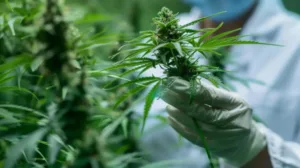

CBD (cannabidiol) is a natural compound found in the cannabis plant. You may have come across CBD oils or gummies labeled as full-spectrum or broad-spectrum CBD. While both contain CBD, their ingredients are not exactly the same.
The main difference is their THC content. Full-spectrum CBD contains small amounts of THC along with other natural plant compounds. Broad-spectrum CBD, on the other hand, goes through additional processing to remove or reduce THC.
So, does this difference affect how well CBD works or how safe it is to use? This guide explains the key differences between the two and what current research says about their potential effects.
What Is Full-Spectrum CBD?
Full-spectrum CBD contains cannabidiol (CBD) along with other natural compounds found in the cannabis plant. These include other cannabinoids, terpenes (compounds that give the plant its smell), and small amounts of THC.
To keep these compounds together, manufacturers use extraction methods that preserve a wide range of the plant’s natural components. As a result, full-spectrum CBD may contain more than just CBD, which may influence how it works in the body.
What Does Full-Spectrum Cannabis Contain?
Full-spectrum cannabis contains several natural compounds, although their exact amounts depend on the plant and extraction method. Some of the main compounds include:
- CBD: A cannabinoid that does not cause a high.
- THC: The main compound in cannabis responsible for producing a high.
- Minor cannabinoids: Other naturally occurring compounds, such as CBG and CBC.
- Terpenes: Natural compounds that give cannabis its distinct smell and aroma.
Full-spectrum CBD products made from hemp may also contain small amounts of THC. However, the amount can vary from one product to another. Even small amounts of THC can add up with regular use and may affect drug test results.
What Is Broad-Spectrum CBD?
Broad-spectrum CBD, on the other hand, also contains cannabidiol (CBD), along with minor cannabinoids, such as CBG and CBN. However, manufacturers generally remove THC during processing. That’s why it is called broad-spectrum.
It is suitable for people who want exposure to cannabinoids with minimal THC. But one thing to remember here is that THC removal does not always guarantee a completely THC-free product.
What Does Broad-Spectrum Cannabis Contain?
It usually contains CBD, minor cannabinoids, and some terpenes. Manufacturers use extraction and purification methods to reduce THC while retaining other compounds. As a result, the final cannabinoid profile varies between products.
For example, one broad-spectrum oil may contain CBD and CBG, while another includes several additional cannabinoids. That variation makes independent laboratory testing particularly useful when comparing products.
Full-Spectrum vs Broad-Spectrum CBD: Key Differences at a Glance
Now that you know what exactly is full-spectrum and broad-spectrum CBD, let’s take a quick look at other differences between them. The table below compares both types of CBD based on ten important factors.
Factor | Full-Spectrum CBD | Broad-Spectrum CBD |
Cannabinoid composition | CBD, minor cannabinoids, terpenes, flavonoids, trace THC | CBD, minor cannabinoids, terpenes |
THC content | Up to 0.3% by dry weight | None or trace amounts |
Potency and effects | Wider profile, may feel more layered | Wide profile, may feel gentler |
Entourage effect | More likely in theory | Possible, less likely |
Psychoactive effects | Unlikely at low doses | Not expected |
Drug test risk | Higher | Lower, not zero |
Side effects and safety | CBD side effects plus possible THC effects | CBD side effects only |
Legal considerations | Depends on THC concentration, product type, and jurisdiction | Depends on formulation and applicable laws |
Suitability | Adults who are comfortable with trace THC | THC-sensitive or drug-tested adults |
Potential uses | Support for pain, sleep, and stress | Under investigation for similar conditions |
Full Spectrum vs Broad Spectrum CBD: Which Is More Potent?
Some people consider full-spectrum CBD stronger because it contains THC alongside other cannabinoids. However, researchers have not established that full-spectrum CBD consistently produces stronger effects than broad-spectrum CBD.
To understand the difference, you first need to look at the CBD concentration. For example, two CBD oils may contain 25 mg of CBD per serving. But at the same time, the amounts of THC and other cannabinoids may differ.
Another factor is the entourage effect. This theory suggests that cannabinoids and terpenes may work together and influence how cannabis affects the body.
Some early studies suggest these interactions are possible. However, there is still not enough strong human evidence to confirm that one type of CBD consistently works better than the other.
Therefore, when comparing full-spectrum and broad-spectrum CBD, you should consider the following factors:
- CBD dosage
- THC content
- Other ingredients.
Quick Fact: Full-spectrum CBD is not necessarily more potent simply because it contains THC.
Potential Uses and Effects of Full-Spectrum and Broad-Spectrum CBD

People often use CBD products to help with pain, anxiety, sleep problems, and certain neurological conditions. However, research on these benefits is still ongoing, and some uses have stronger scientific support than others.
Also, there is not enough evidence to confirm that full-spectrum or broad-spectrum CBD products can effectively treat all these conditions.
Pain and Inflammation
CBD may affect how the body responds to pain and inflammation. Some laboratory studies have shown promising results, but researchers still need more human studies to confirm whether CBD provides meaningful pain relief.
In addition, many studies focus on cannabis products that contain both CBD and THC. As a result, it can be difficult to tell how much CBD alone contributes to pain relief.
Therefore, people dealing with ongoing pain should speak with a healthcare provider before using CBD as part of their treatment.
Anxiety and Stress
Some studies suggest that CBD may help reduce anxiety symptoms in certain situations. However, the results are not consistent because researchers use different CBD doses and formulations.
Also, most studies have involved relatively small groups of people. Larger studies are still needed to understand how well CBD works and whether it is safe for long-term use.
For now, there is not enough evidence to confirm that either full-spectrum or broad-spectrum CBD is an effective treatment for anxiety.
Sleep Problems
Some people report feeling more relaxed or sleeping better after taking CBD. However, sleep problems can have many causes, including stress, certain medications, and underlying health conditions.
Although researchers have studied CBD for sleep, the results remain mixed. There is still not enough evidence to confirm that commercial CBD products consistently improve sleep quality.
Moreover, full-spectrum CBD contains THC, which may affect sleep differently depending on how much and how often a person uses it.
Epilepsy and Seizure Disorders
Compared with other potential uses, CBD has stronger scientific evidence for treating certain types of seizures.
In fact, the FDA has approved a prescription CBD medication called Epidiolex to treat seizures associated with three conditions:
- Lennox-Gastaut syndrome
- Dravet syndrome
- Tuberous sclerosis complex
However, Epidiolex contains purified CBD and is different from the full-spectrum and broad-spectrum products available in stores.
Therefore, its proven benefits do not mean that regular CBD oils or gummies will provide the same results. People with epilepsy should also never stop or replace their prescribed seizure medications with CBD products without consulting their healthcare provider.
Are Full-Spectrum and Broad-Spectrum CBD Safe?
Both full-spectrum and broad-spectrum CBD can cause side effects, even if they contain very little or no THC. However, the risks can vary depending on how much CBD you take, your overall health, and whether you use other medications.
Therefore, before trying either type, it is important to understand the possible side effects and safety concerns.
Possible Side Effects and Medication Interactions
CBD can cause some unwanted side effects, including:
- Drowsiness or feeling less alert
- Diarrhea and changes in appetite
- Irritability or mood changes
- Increased liver enzyme levels
- Interactions with certain prescription medications
In a 2025 FDA-reported clinical trial involving 201 participants, researchers gave 151 participants CBD and 50 a placebo. After four weeks, an estimated 5.6% of the CBD group had elevated liver enzymes exceeding three times the normal upper limit.
However, participants took around 250 to 550 mg of CBD daily. Therefore, these findings do not necessarily mean that lower doses carry the same level of risk.
CBD can also affect how the body breaks down certain medications, including some seizure medicines and sedatives. So, if you take prescription medications, it is best to speak with your healthcare provider before using CBD.
Can Either Type Cause a High or a Positive Drug Test?
Full-spectrum CBD contains THC, so it may cause a high if you consume enough of it. On the other hand, broad-spectrum CBD usually contains little or no THC, making intoxication less likely.
However, both types may carry some risk of a positive drug test.
Most workplace drug tests look for THC metabolites, which are substances your body produces after processing THC. Even small amounts of THC can build up with regular use and may lead to a positive result.
Therefore, if your workplace requires drug testing, you should be careful when choosing CBD products. Even products marketed as THC-free cannot guarantee a negative drug test result.
Is Full-Spectrum or Broad-Spectrum CBD Legal in the United States?
The legality of full-spectrum and broad-spectrum CBD in the United States depends on their THC content, how the products are sold, and federal and state laws.
Under the 2018 Farm Bill, hemp products generally qualified as legal hemp under federal controlled-substance laws if they contained no more than 0.3% delta-9 THC by dry weight.
However, new federal legislation passed in 2025 introduces stricter rules for hemp products. These changes are scheduled to take effect on November 12, 2026, and include new limits on total THC content in finished products.
The Congressional Research Service’s December 2025 report explains these changes and how they may affect hemp products.
In addition, the FDA has separate rules for CBD products. Even if a product meets the federal definition of hemp, that does not automatically mean companies can legally sell it as a food ingredient or dietary supplement.
State laws can also differ. Therefore, neither full-spectrum nor broad-spectrum CBD is automatically legal everywhere in the United States. It is important to check the latest federal and state regulations before buying or using either type.
The Final Words
Full-spectrum and broad-spectrum CBD contain many of the same natural cannabis compounds. However, the main difference is their THC content. Full-spectrum CBD contains some THC, while broad-spectrum CBD usually has little or no THC.
Both types may offer potential benefits, but research has not yet proven that one works better than the other. Also, most commercial CBD products still need more research to confirm their effectiveness and long-term safety.
If you are considering cannabis-based products for a medical condition, speak with a licensed healthcare provider before making a decision. They can help you understand the available evidence and potential safety concerns.
For patients exploring state medical marijuana programs, MedCert offers online certification evaluations with licensed medical providers in supported states. You can schedule an evaluation to discuss eligibility and learn more about the certification process.