
Living with rheumatoid arthritis can mean dealing with joint pain and stiffness even when you follow your prescribed treatment. That is why some people with RA wonder whether cannabis could offer additional relief.
Persistent symptoms can make everyday tasks harder, especially during an RA flare. However, finding something that eases discomfort is different from treating the inflammation that causes joint damage.
Some people consider THC or CBD products to help manage their symptoms. But researchers have not established how reliably these products relieve RA-specific pain.
In this guide, we will examine what research says about cannabis for RA pain and sleep problems. We will also explain its risks and why it cannot replace established RA treatment.
Quick Summary
Weed and rheumatoid arthritis have received growing research interest because cannabinoids may help some people with chronic pain or sleep problems. However, current evidence does not show that cannabis treats RA itself or prevents joint damage. Medical cannabis may have a supportive role for selected patients under professional guidance.
What Is Rheumatoid Arthritis (RA)?

Rheumatoid Arthritis is basically a chronic autoimmune disease in which your immune system mistakenly attacks healthy tissue. It particularly attacks the lining of your joints. As a response, it can cause inflammation and eventually damage cartilage as well as bone.
This disease commonly affects the hands, wrists, and feet, often on both sides of the body. Its symptoms can include:
- Swollen or tender joints
- Stiffness
- Fatigue
- Gradual joint damage
- Flares
Note: RA involves an abnormal immune response. It is different from osteoarthritis, which mainly changes cartilage and other joint tissues over time.
Why Does Rheumatoid Arthritis Cause Pain?
Rheumatoid arthritis (RA) is intensely painful because the body’s immune system mistakenly attacks the synovium, which is the delicate lining that protects and lubricates the joints.
When inflammation continues, the tissues around a joint can become swollen and sensitive. As a result, the patient feels sharp pain in the joints. Over time, structural damage can also become a source of persistent pain.
Besides, these other factors that can influence how intense pain feels:
- Nervous system processing
- Poor sleep
- Fatigue
- Ongoing health conditions
During a flare, pain and stiffness may suddenly become much worse. Fatigue and poor sleep can then make an already difficult day feel even harder.
Can Cannabis Help With Rheumatoid Arthritis?
There is no one-word answer to this question. It may or may not help, as research has not established it as a treatment for rheumatoid arthritis.
Instead, most of the cannabis research covers chronic pain broadly, with far fewer controlled studies focusing specifically on RA. Let’s learn about the symptoms people most often hope to improve with cannabis.
Cannabis and RA Pain
Pain relief is one of the areas researchers have explored in people with rheumatoid arthritis. One small clinical trial involving 58 people with RA examined a cannabis-based oral spray over five weeks. Researchers reported improvements in some pain-related measures. However, the study was too small and short to establish whether the treatment provides lasting relief.
Compared with the placebo group, participants using the cannabis-based spray experienced improvements in pain during movement, pain at rest, and sleep quality. However, the researchers did not find a significant improvement in morning stiffness.
So, we can say that a person with RA might experience some symptom relief. However, larger and longer clinical trials are still needed to determine how effective cannabis is for RA pain and whether these benefits last over time.
Cannabis and Inflammation
Researchers are investigating whether cannabinoids can influence inflammatory processes involved in rheumatoid arthritis. Cannabinoids can interact with the body’s endocannabinoid system, which plays an important role in pain signaling and immune activity.
While this interaction suggests a possible effect on inflammation, researchers still need stronger evidence from human studies. Most existing research comes from laboratory and animal studies. A 2024 rheumatology review found that some studies reported changes in inflammation-related markers after cannabinoid use. However, only a small number of studies involved people with RA, so researchers could not draw firm conclusions about whether cannabis reduces joint inflammation in these patients.
So, there is not enough evidence to recommend cannabis as an anti-inflammatory treatment for RA at present.
Cannabis and Sleep
We all know that it is really hard to sleep with painful joints. Sometimes, you do not find the right position, while at other times, the inflammation and stiffness can keep waking you up during the night.
But the good news is that some people with rheumatic conditions report using cannabis to help with sleep. In a 2023 study of 799 rheumatology patients, pain and sleep were among the most common symptoms for which current or recent medical cannabis users reported using cannabis.
However, it should be remembered that the study relied on patient reports and could not establish that cannabis caused those improvements. So, while people may report sleeping better, researchers still need stronger controlled trials to understand the effect in RA.
Can Cannabis Treat Rheumatoid Arthritis or Only Help With Symptoms?
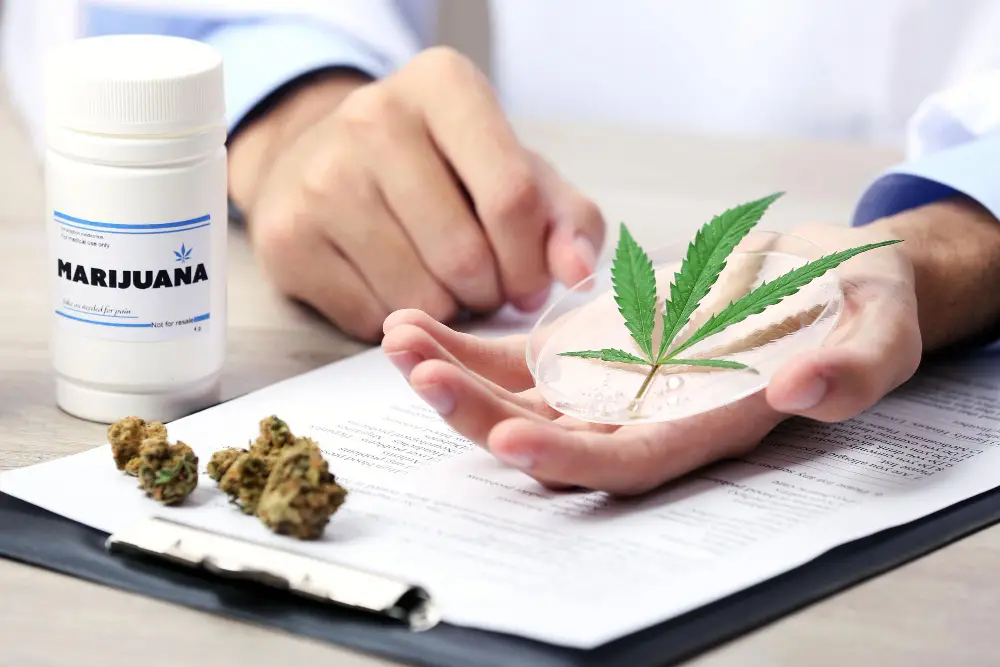
Researchers have not found any evidence that cannabis treats the underlying disease process of rheumatoid arthritis. Instead, the current studies only support its role as an agent to relieve chronic pain, inflammation, and sleep disturbances.
Cannabis usually has two main compounds, THC and CBD, that interact with the body’s endocannabinoid system. Through this interaction, they reduce pain perception and ease joint inflammation. At the same time, they also contribute to improving sleep quality.
A medical provider may discuss cannabis as a possible option for symptom management in selected circumstances. However, it cannot replace disease-modifying antirheumatic drugs (DMARDs), which help control RA disease activity and reduce the risk of joint damage.
For that reason, medical cannabis for rheumatoid arthritis should never automatically replace prescribed RA treatment.
What Are the Risks and Side Effects of Cannabis for People With RA?
Although medical cannabis may turn out to be a suitable option to treat symptoms of rheumatoid arthritis, it may also have some side effects. Here are some of the common risks that come with using THC or CBD products to manage arthritis pain or other conditions:
Common Short-Term Effects
There are some common side effects that last for the short term and do not gain much attention from cannabis users. Still, they matter to know because they depend on cannabinoid content, dose, frequency, personal health, and delivery method.
Here is what people may experience:
- Drowsiness
- Dizziness
- Changes in alertness
- Anxiety or paranoia
- Impaired concentration
- Nausea
- Changes in appetite
Note: Edibles can take longer to produce noticeable effects than inhaled cannabis. Taking more before the first dose has taken effect can increase the risk of unwanted effects.
Mental Health and Dependence Concerns
Another potential risk is mental health disturbance. THC, one of the main compounds in cannabis, can lead to anxiety, paranoia, or disorientation in some people.
In fact, even the CDC reports that about 3 in 10 people who use cannabis have cannabis use disorder. And the risk of these disorders is higher for those who consume THC or CBD frequently or start at a younger age.
So, if you have a personal or family history of mental health problems, you must discuss those concerns with a qualified medical provider before using cannabis products.
Risks of Smoking and Vaping
The method of cannabis use can introduce additional health risks. For example, if you smoke cannabis, it exposes the lungs to smoke and irritants. That can lead to coughing, mucus production, and other respiratory problems.
Vaping, on the other hand, avoids combustion. But that does not mean it is risk-free. You may still expose your lungs to potentially harmful substances even if you use cannabis vaping products. Its effect becomes even worse when products come from unregulated sources.
Possible Interactions With RA Medicines
Cannabis products may interact with medications used to manage rheumatoid arthritis or other health conditions. Its CBD compound can affect enzymes involved in drug metabolism. As a result, it may change how the body handles certain medications.
That is the reason the FDA warns that CBD can affect other medicines. Not just that, the other medicines may also change how CBD acts in the body. Therefore, it is necessary to review your full medication list with a medical provider before adding cannabis or CBD.
Who Should Be Especially Careful With Medical Cannabis?
Cannabis is not suitable for everyone. If you take prescription medicines, discuss cannabis use with your medical provider before adding it to your treatment routine. You may need extra caution before using medical cannabis if you belong to any of the following groups:
- People who are pregnant or breastfeeding
- People with heart or cardiovascular conditions
- People with a history of psychosis or certain other mental health conditions
- People with a history of cannabis or other substance use disorders
- Older adults who have a higher risk of dizziness, falls, or medication interactions
- If you are taking multiple prescription medications
Quick Tip: THC can impair attention and reaction time. Do not drive or operate machinery while impaired by cannabis.
Is Medical Cannabis Legal, and How Do You Get Certified?
Medical cannabis laws vary by state. In Virginia, eligible residents need a written certification from a qualified practitioner. One thing to remember here is that Virginia does not use a fixed list of qualifying medical conditions.
Instead, an eligible practitioner determines whether a patient has a condition or disease that could benefit from medical cannabis, according to the Virginia Cannabis Control Authority. Qualified practitioners include certain physicians, physician assistants, and advanced practice registered nurses.
If you live in Virginia and want to discuss whether you may qualify, MedCert’s Virginia medical marijuana certification service provides 100% online evaluations with licensed medical providers. The evaluation costs $79, and MedCert offers a full refund if you do not receive certification.
The Final Words
In short, cannabis may help people with some RA-related pain or sleep difficulties, but it should not be considered a replacement for conventional medication. Instead, it is currently serving as a supplementary tool to reduce inflammation and manage pain.
If you live in Virginia and want to find out whether medical cannabis could be appropriate for your situation, you can start an online evaluation with MedCert. During the appointment, you can discuss your RA symptoms and current medications before the provider determines whether certification is appropriate.