According to the National Institute on Drug Abuse (NIDA), approximately 42% of adults aged 19 to 30 reported cannabis use in 2023. At the same time, millions of Americans take antibiotics every year for common infections, and this overlap creates a real concern for many.
Most people worry about two things:
1) Will my antibiotics still work?
2) Does weed react with antibiotics?
The reality is that your body handles both substances through the same pathways. We will break down exactly how this works to keep you safe. This guide explores the big question: Can I smoke weed while taking antibiotics?
To answer this question, we will look at the science of liver enzymes and research on THC and CBD. We will also cover the side effects to watch for.
Does Weed Interfere with Antibiotics
Health experts are still digging into how cannabis interacts with modern prescriptions. Right now, there is no single risk rule for everyone. But that does not mean the two always play nice together.
Your body uses the liver to clean out both weed and medicines. Think of your liver as a busy processing center for everything you eat or smoke. It uses enzymes to break these chemicals down so they can be eliminated from your system.
If you add cannabis and antibiotics at the same time, the liver gets crowded. These enzymes have to choose which substance to process first. This overload can lead to a traffic jam situation in your bloodstream. Research shows that cannabinoids can inhibit key CYP450 enzymes like CYP2C9 and CYP3A4, which are responsible for metabolizing many common antibiotics and medications
The result is that your antibiotic levels might get too high or too low. If the levels drop, the bacteria might survive. If they get too high, you might feel more sick from the medicine’s side effects.
Can You Smoke Weed on Antibiotics: What Does the Research Say?
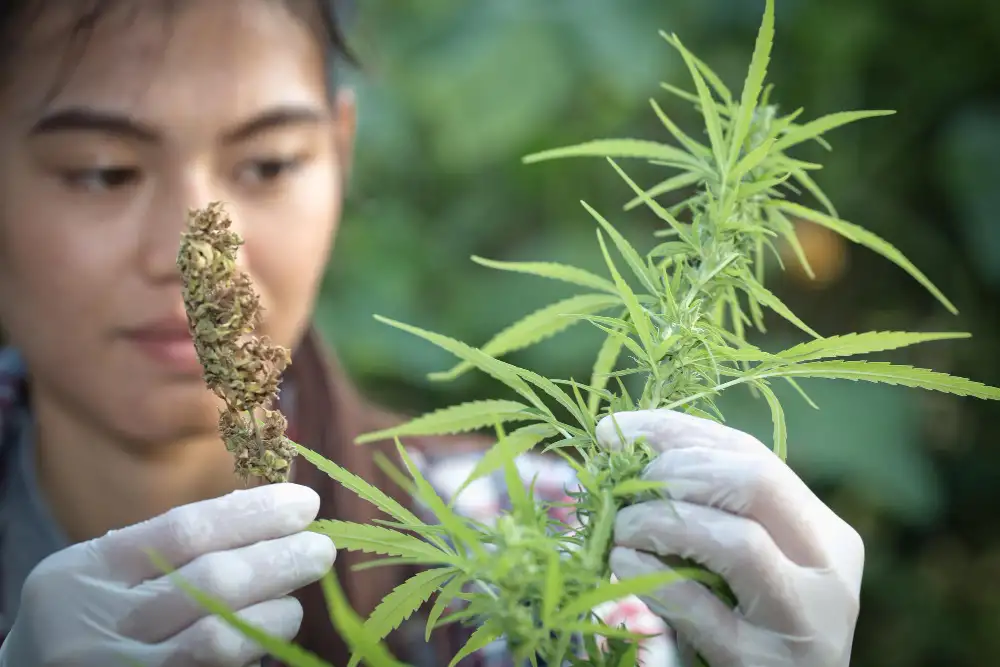
Most research on smoking weed and using antibiotics together is fairly new because of legal changes. We do not have thousands of human trials yet. Some findings suggest certain cannabis varieties may have antibacterial properties and could support antibiotics against difficult infections.
However, other experts caution that cannabis may interfere with the effectiveness of many prescription medications, meaning it may not always be safe to combine the two. To understand this more clearly, let’s look at how CBD and THC, the two key compounds in cannabis, affect antibiotics.
CBD and Antibiotic Use
CBD is often called the non-psychoactive part of the plant. It means it doesn’t make you feel high or alter your mental state as THC does. But for your liver, it is actually very active. It likes to bind to the same enzymes that antibiotics target.
Studies show that CBD can temporarily block these enzymes. This keeps the antibiotic in your blood longer than it should be. This can put extra strain on your internal organs.
Because of this enzyme interaction, CBD can affect how certain antibiotics are processed by the liver. Some antibiotics, such as clarithromycin, erythromycin, and rifampicin, are more sensitive to these changes and are reported to interact with CBD. Such antibiotics may increase side effects or reduce the effectiveness of the treatment.
THC and Antibiotic Use
THC is the compound that makes you feel high. It moves through your body a bit differently than CBD. It usually hits your brain and nervous system faster than your liver.
Some lab tests suggest that THC has its own way of fighting bacteria. But this does not mean you can skip your real medicine. THC is not strong enough to kill a real infection on its own.
A big worry with THC is how it masks your actual symptoms. If you feel high, you might ignore a fever or a new pain. This could let an infection get worse without you realizing it.
Certain antibiotics, like erythromycin, are known to be tricky with THC. Mixing them can sometimes make your heart race or make you feel very dizzy. It is a combination that needs extra attention.
Potential Side Effects of Combining Weed and Antibiotics
Mixing weed and antibiotics can lead to some uncomfortable moments. Antibiotics often cause stomach issues like diarrhea or cramps. Cannabis can sometimes make these feelings much stronger.
You should watch your body closely in the first few hours. Here is a list of what patients often report:
- Feeling much more tired or heavy than usual.
- A spinning feeling in the head when you stand up.
- Increased nausea or a stomach that feels like it is in knots.
- A heart rate that feels fast or uneven for a while.
These effects can vary based on your age and health history. If you already have heart issues, you should be very cautious. Your body is already under pressure from the infection itself.
Smoking also creates heat and irritation in your throat. If you are fighting a lung infection, smoking cannabis is a bad idea. It can keep the inflammation high and slow down your recovery.
Conclusion
Weed is not reported to interact with all antibiotics, but it still interacts with a few. But cannabis may slow your recovery or increase side effects like drowsiness.
Your best move is to prioritize healing. Finish your full antibiotic course and consider pausing cannabis use until you feel better. If you have questions about your specific medications, talk to a medical provider who understands your health history.
If you need help navigating medical cannabis, MedCert offers fast, affordable online certifications for just $79. Our licensed providers can guide you through the process in minutes. Visit MedCert today to get started with a HIPAA-compliant consultation that puts your health first.