
MedCertMedCert
  • Home
  • Get Certified
    • New York
    • Virginia
  • Blog
  • Locations
    • Virginia Beach Marijuana Card
    • Chesapeake Marijuana Card
    • Arlington Marijuana Card
    • Norfolk Marijuana Card
    • Richmond Marijuana Card
    • Newport News Marijuana Card
    • Alexandria Marijuana Card
    • Hampton Marijuana Card
    • Suffolk Marijuana Card
    • Roanoke Marijuana Card
    • Lynchburg Marijuana Card
    • Dale City Marijuana Card
    • Portsmouth Marijuana Card
    • Centreville Marijuana Card
    • Reston Marijuana Card
    • McLean Marijuana Card
    • Leesburg Marijuana Card
    • Tuckahoe Marijuana Card
    • Ashburn Marijuana Card
    • Burke Medical Marijuana
    • Woodbridge Medical Marijuana
    • Manassas Medical Marijuana
    • Charlottesville Medical Marijuana
    • Lake Ridge Medical Marijuana
    • Blacksburg Medical Marijuana
  • Contact Us
MedCertMedCert
MedCert
  • Home
  • Get Certified
    • New York
    • Virginia
  • Blog
  • Locations
    • Virginia Beach Marijuana Card
    • Chesapeake Marijuana Card
    • Arlington Marijuana Card
    • Norfolk Marijuana Card
    • Richmond Marijuana Card
    • Newport News Marijuana Card
    • Alexandria Marijuana Card
    • Hampton Marijuana Card
    • Suffolk Marijuana Card
    • Roanoke Marijuana Card
    • Lynchburg Marijuana Card
    • Dale City Marijuana Card
    • Portsmouth Marijuana Card
    • Centreville Marijuana Card
    • Reston Marijuana Card
    • McLean Marijuana Card
    • Leesburg Marijuana Card
    • Tuckahoe Marijuana Card
    • Ashburn Marijuana Card
    • Burke Medical Marijuana
    • Woodbridge Medical Marijuana
    • Manassas Medical Marijuana
    • Charlottesville Medical Marijuana
    • Lake Ridge Medical Marijuana
    • Blacksburg Medical Marijuana
  • Contact Us
MedCertMedCert
  • Home
  • Get Certified
    • New York
    • Virginia
  • Blog
  • Locations
    • Virginia Beach Marijuana Card
    • Chesapeake Marijuana Card
    • Arlington Marijuana Card
    • Norfolk Marijuana Card
    • Richmond Marijuana Card
    • Newport News Marijuana Card
    • Alexandria Marijuana Card
    • Hampton Marijuana Card
    • Suffolk Marijuana Card
    • Roanoke Marijuana Card
    • Lynchburg Marijuana Card
    • Dale City Marijuana Card
    • Portsmouth Marijuana Card
    • Centreville Marijuana Card
    • Reston Marijuana Card
    • McLean Marijuana Card
    • Leesburg Marijuana Card
    • Tuckahoe Marijuana Card
    • Ashburn Marijuana Card
    • Burke Medical Marijuana
    • Woodbridge Medical Marijuana
    • Manassas Medical Marijuana
    • Charlottesville Medical Marijuana
    • Lake Ridge Medical Marijuana
    • Blacksburg Medical Marijuana
  • Contact Us
MedCertMedCert
MedCert
  • Home
  • Get Certified
    • New York
    • Virginia
  • Blog
  • Locations
    • Virginia Beach Marijuana Card
    • Chesapeake Marijuana Card
    • Arlington Marijuana Card
    • Norfolk Marijuana Card
    • Richmond Marijuana Card
    • Newport News Marijuana Card
    • Alexandria Marijuana Card
    • Hampton Marijuana Card
    • Suffolk Marijuana Card
    • Roanoke Marijuana Card
    • Lynchburg Marijuana Card
    • Dale City Marijuana Card
    • Portsmouth Marijuana Card
    • Centreville Marijuana Card
    • Reston Marijuana Card
    • McLean Marijuana Card
    • Leesburg Marijuana Card
    • Tuckahoe Marijuana Card
    • Ashburn Marijuana Card
    • Burke Medical Marijuana
    • Woodbridge Medical Marijuana
    • Manassas Medical Marijuana
    • Charlottesville Medical Marijuana
    • Lake Ridge Medical Marijuana
    • Blacksburg Medical Marijuana
  • Contact Us
Medical Marijuana Reduce Glaucoma Eye Pressure

How Medical Marijuana May Help Reduce Glaucoma Eye Pressure

Medical Marijuana Reduce Glaucoma Eye Pressure

When it comes to protecting your vision from glaucoma, even small changes in eye pressure can make a lasting difference. It is a scary situation because once the optic nerve is damaged, the vision loss is usually permanent.

For decades, a common rumor has circulated through doctor offices and support groups that smoking weed can save your eyes. While there is some truth to the idea that cannabis can lower the pressure inside your eye, the reality for patients is much more complicated than simply reducing eye pressure.

In this article, we will break down the science behind the use of cannabis for glaucoma and how specific compounds in the plant interact with your ocular system. We will also look at the major hurdles that make it difficult to use as a primary medical strategy for glaucoma. 

What Is Glaucoma and Why Does Eye Pressure Matter?
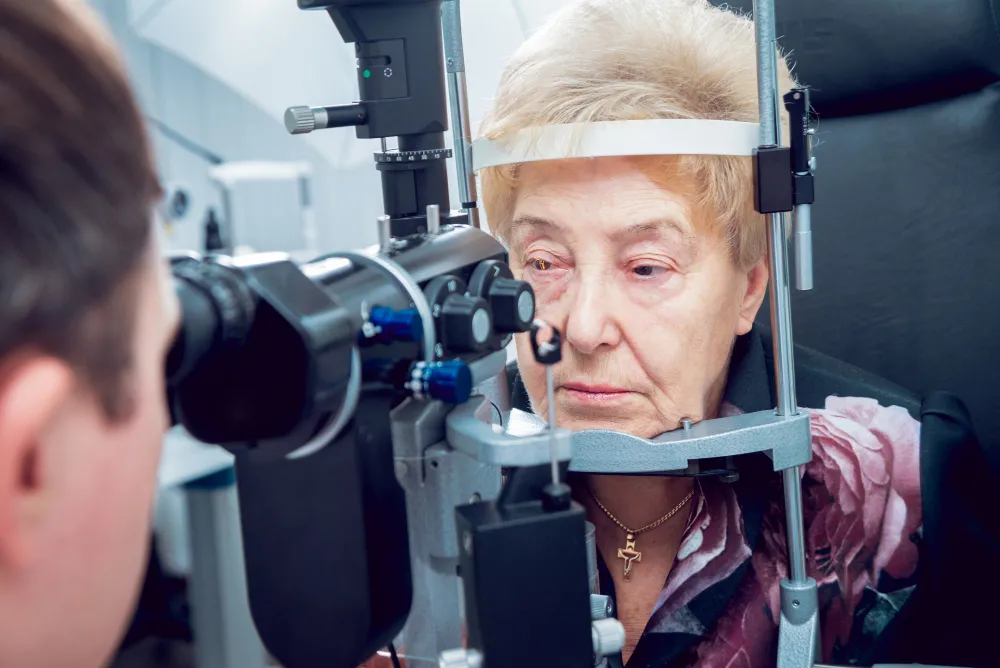
Glaucoma and its effects on human eye

Before exploring treatment options, it is important to understand what glaucoma is and why eye pressure plays such a critical role. Glaucoma is often called the silent thief of sight. This condition happens when the fluid in the front part of your eye does not drain properly. 

The fluid buildup increases pressure inside the eye, called intraocular pressure (IOP). Think of it like a tire that is over-inflated; eventually, that extra force starts to crush the delicate fibers of the optic nerve.

The optic nerve is the cable that sends images from your eye to your brain. When IOP stays excessively high for too long, these nerve fibers become damaged. 

The process starts with your side vision and moves inward until total blindness occurs. The biggest challenge for doctors is that this pressure needs to be kept at a steady, low level 24 hours a day. If the pressure spikes while you are sleeping or at work, the damage continues to progress.

What is the Connection Between Glaucoma and Marijuana?

The connection between glaucoma and marijuana comes down to one effect. THC, the active compound in cannabis, can lower the pressure inside your eye for a short period of time. That pressure is called intraocular pressure, or IOP, and it is the main force that wears down the optic nerve as glaucoma progresses. When researchers in the early 1970s saw that using cannabis for glaucoma eye pressure could reduce IOP by 25% to 40%, it attracted interest as a potential treatment option.

However, the effect is more limited than many people realize. Marijuana does not treat the disease, and it does not protect the optic nerve. It only affects one risk factor, and it does so only while THC is active in your body. Once that effect fades, your eye pressure climbs back to where it started.

Another important consideration is its effect on blood pressure. Marijuana lowers blood pressure throughout the body, and the optic nerve depends on adequate blood flow to function properly. So while cannabis is lowering eye pressure, it may also be reducing the blood supply that supports optic nerve function. This potential trade-off is one reason clinicians remain cautious about recommending cannabis for glaucoma.

What About CBD for Glaucoma Eye Pressure?

CBD does not lower eye pressure, and some research suggests it may raise it. For anyone thinking about cannabis with their vision in mind, this is an important point to understand.

The confusion is easy to follow. CBD has become well known for easing anxiety and discomfort, so it feels natural to expect it would help with glaucoma too. The evidence points the other way. A 2018 study from Indiana University researchers found that CBD raised eye pressure by 18% in mice, while THC brought it down. The same study showed that CBD can interfere with THC and cancel out its pressure-lowering effect.

For glaucoma in particular, THC is the compound that matters, not CBD. A product marketed as high in CBD may do nothing for your eye pressure, and in some cases, it could work against you. Patients considering cannabis products should pay close attention to THC and CBD content.

Does Marijuana Help With Glaucoma?

The link between marijuana and eye health is not a new discovery. In 1971, a famous study published in the Journal of the American Medical Association (JAMA) found that smoking cannabis could drop eye pressure by 25% to 40%. It was a huge deal at the time because the glaucoma drugs available back then had very harsh side effects.

However, the excitement faded when researchers examined the compound’s duration of effectiveness. The pressure-lowering effect of THC only lasts for about three or four hours. To keep your eye pressure low enough to prevent nerve damage, you would have to use the drug six to eight times every single day. 

This short duration creates a cycle where the medicine wears off long before the next dose, leaving the eye vulnerable to damage during those gaps.

How Does Marijuana Help Glaucoma in Humans?

Scientists have discovered that the human eye is actually full of tiny locks called cannabinoid receptors. These are located in the trabecular meshwork, the eye’s drainage system. 

When THC enters the bloodstream, it binds to these receptors, helping the eye’s fluid drain more efficiently while also slowing down the production of new fluid. It is a two-way attack under high pressure.

It is also important to understand that not all components of cannabis work the same way. THC is the compound responsible for both the psychoactive effects and the reduction in eye pressure. In contrast, CBD, which is commonly used for anxiety and pain, does not lower eye pressure and may even work against this effect.

If you are looking for how marijuana helps glaucoma in humans, you need to focus on the THC content, as CBD may be counterproductive for this specific condition.

Why Cannabis for Glaucoma Treatment is Not Always Practical
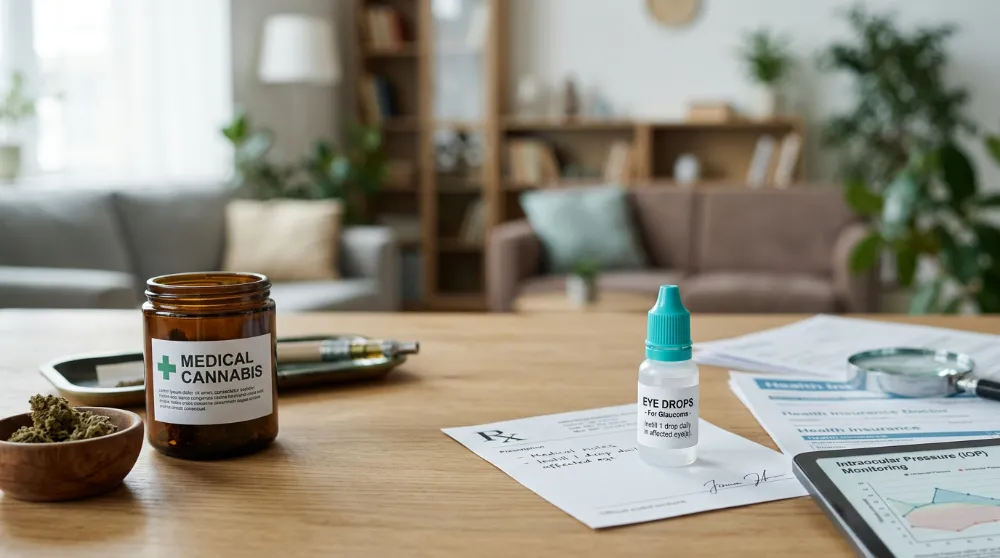
Cannabis for Glaucoma Treatment is Not Always Practical

Even though the plant has the power to lower IOP, using weed for glaucoma treatment on a daily basis presents major lifestyle problems. 

If a person has to smoke or eat cannabis every three hours to save their sight, they would be under the influence of THC around the clock. This makes it nearly impossible to drive a car or handle complex mental tasks.

There is also a financial burden. Buying enough high-quality cannabis to maintain a therapeutic level 24/7 is much more expensive than standard prescription eye drops. 

Most insurance plans do not cover medical marijuana, whereas traditional glaucoma medications are often very cheap or covered by basic plans. For most people, the logistical and financial costs simply do not add up when compared to modern medical options.

Risks and Side Effects to Consider

Using cannabis for glaucoma comes with several practical, financial, and health-related challenges. Before choosing this path, you need to understand its full impact on your overall well-being. Beyond being high, there are physical risks that can actually hurt your vision in the long run.

Blood Pressure Drops: Marijuana lowers blood pressure throughout the body. While this sounds good, it can reduce blood flow to the optic nerve. If the nerve does not get enough blood, it can die even if the eye pressure is low.

Mental Focus: Constant use can lead to short-term memory issues and reduced motivation.

Lung Health: If you choose to smoke the medicine, you are exposing your lungs to many of the same toxins found in tobacco smoke.

Heart Rate: Cannabis can cause a racing heart, which is a risk for older patients or those with existing heart conditions.

What is the Future of Marijuana for Glaucoma Treatment?

The future of marijuana in glaucoma care is unlikely to involve smoking at all. A more practical area of research is delivering THC’s pressure-lowering effect in a controlled form, without the high, the short duration, and the constant dosing that make raw cannabis impractical.

Researchers are now testing cannabinoid eye drops and slow-release formulas designed to hold IOP steady through the day and night. Progress has been slow, mostly because THC does not dissolve well in water and is hard to deliver to the eye in a stable form. These challenges have limited progress in developing cannabinoid-based eye treatments.

For now, the American Academy of Ophthalmology does not recommend marijuana as a glaucoma treatment, and it has held that position for years. Until a long-acting cannabinoid therapy proves both safe and effective in proper clinical trials, prescription eye drops and laser procedures will stay the standard of care. Future cannabinoid-based therapies may eventually have a role in glaucoma treatment, but as a carefully delivered medicine rather than something used several times a day.

Conclusion

The science is clear that cannabis can lower the pressure that causes glaucoma. However, it is not a permanent solution. Since the effects wear off so quickly, it is very hard to use as a standalone treatment without being constantly impaired. 

Traditional eye drops and laser surgeries remain the gold standard because they provide steady, 24-hour protection with far fewer risks to your daily life.

If you are struggling with your current treatment or want to explore alternatives, the most important step is talking to a professional. You should never stop your prescribed eye drops to switch to cannabis without a doctor’s help, as this could lead to rapid vision loss.

At MedCert, we help patients navigate the complexity of medical cards and state regulations regarding medical cannabis use. We can help you understand how to integrate medical options into a safe and effective health plan.


Frequently Asked Questions

Can medical marijuana help reduce eye pressure in glaucoma patients?

Medical marijuana can help reduce eye pressure in glaucoma patients for a short time. THC in cannabis can lower intraocular pressure by 25% to 40%, though the effect fades within a few hours. That brief window makes it hard to keep the steady, all-day protection glaucoma needs.

How does cannabis reduce intraocular pressure (IOP)?

THC binds to cannabinoid receptors in the eye’s drainage system, known as the trabecular meshwork. This helps fluid drain more easily and slows the production of new fluid. With less fluid building up, the pressure inside your eye starts to drop.

How long does marijuana lower eye pressure?

The effect usually lasts around three to four hours. After that, eye pressure typically returns toward baseline, limiting the consistency of pressure control.

Can weed help glaucoma permanently?

Cannabis manages eye pressure only for a while, and it cannot reverse damage that has already reached the optic nerve. A short-term reduction in eye pressure is generally insufficient for long-term glaucoma management.

Why can't cannabis be used as the main treatment for glaucoma?

The effect wears off too fast, and the dosing schedule is simply unworkable. Keeping pressure low all day would mean staying impaired for most of it. Cannabis can also reduce blood flow to the optic nerve, which may harm vision even when eye pressure looks fine.

How often would a patient need to use cannabis to manage eye pressure?

Roughly six to eight times a day, with very little time in between. A schedule like that makes driving, working, and most daily tasks unsafe, which is one of the clearest reasons doctors avoid it as a primary option.

Is it safe to replace glaucoma eye drops with cannabis?

You should never stop your prescribed eye drops in favor of cannabis without medical guidance. Doing so can let your pressure spike and cause rapid, permanent vision loss. Any change to your treatment belongs in a conversation with your provider.

What are the risks of using cannabis for glaucoma patients?

The main risks include reduced blood flow to the optic nerve, lower mental focus, lung damage from smoking, and a faster heart rate that can strain older patients. In most cases, these drawbacks outweigh the brief relief cannabis offers.

Share Post
  • Twitter
  • Facebook
  • VK
  • Pinterest
  • Mail to friend
  • Linkedin
  • Whatsapp
  • Skype
How Recent Cannabis Studies Ar...
Cannabis Studies Are Changing Sleep Science
Weed and Rheumatoid Arthritis
How to Safely Incorporate Weed...

Related posts

medical marijuana Arlington
Read more

Arlington Medical Marijuana Certification: Step-by-Step

Have you ever felt lost while trying to figure out how to legally access medical cannabis in Virginia? The rules often change, and many people... Continue reading
Weed and Rheumatoid Arthritis
Read more

How to Safely Incorporate Weed into a Rheumatoid Arthritis Treatment Plan

Do you wake up every morning feeling like your joints are locked in place? The stiff and painful sensation is a daily struggle for millions... Continue reading
Cannabis Studies Are Changing Sleep Science
Read more

How Recent Cannabis Studies Are Changing Sleep Science

A good night’s sleep feels like a dream for many. You might toss and turn for hours or wake up feeling like you never closed... Continue reading
Can Weed Help Headaches Risks and Benefits for Relief
Read more

Risks and Benefits of Using Cannabis for Headache Management

Many people live with the constant weight of a throbbing headache and a sharp pain behind their eyes. When common painkillers fail to provide relief,... Continue reading
Medical Marijuana Card
Read more

When to Renew Medical Marijuana Card – A Complete Guide

Many patients put off renewing their medical marijuana card until it is almost expired. You may only notice the issue when you reach the dispensary... Continue reading

Comments are closed

Selected static block was removed or unpublished
MedCert
Legal Disclaimer

This site exists for the purpose of providing medical marijuana certifications for patients with qualifying medical diagnosis’. It does not directly dispense any products, nor does it promote or advertise any products or services in violation of any state or federal laws. All consultations are performed by licensed healthcare professionals in accordance with applicable law, including HIPAA. We do not prescribe controlled substances. All determinations are made at the discretion of the evaluating provider.

Quick Links

  • Home
  • About Us
  • Virginia
  • NewYork
  • Contact Us

Contact Info

Address

MedCert Benjamin Domingo 1550 Wilson Blvd. Ste 700 PMB484.

Phone

(315)254-6634

Fax

(424)484-2667

MedCert. All Rights Reserved.

PRIVACY, TERMS & CONDITIONS

MedCertCards provides medical certifications for individuals with qualifying conditions. All certifications are performed by licensed medical professionals authorized to certify in the applicable state. MedCertCards does not sell, distribute, prescribe or endorse any products.

By booking an appointment, you acknowledge and agree to the following:

  1. Medical certifications are issued only for qualifying medical conditions, as determined solely by the certifying provider.
  2. The $79 fee covers the evaluation and certification process required to become eligible for purchasing from licensed medical dispensaries.
  3. If you are not certified, the $79 fee will be refunded in full. Please allow 3–5 business days for processing.
  4. You confirm that all information you provide is accurate to the best of your knowledge, and you agree to supply supporting documentation if requested.
  5. You agree to consult with your primary care provider or relevant specialists to determine whether natural therapies are appropriate for your overall care plan.
  6. You consent to your appointment being conducted via a telemedicine platform, and acknowledge the associated risks, benefits, and limitations.
  7. You consent to receiving phone calls, text messages, and video visit links, understanding that standard carrier charges may apply.
  8. Once a certification is approved and issued, the $79 fee is non-refundable.

By proceeding with your booking, you confirm that you have read, understood, and agreed to these Terms & Conditions.