When cancer touches your life whether it’s your diagnosis or someone you care about, it’s natural to search for anything that might help. Alongside conventional treatments, many people encounter claims about cannabis and cancer while searching for answers. A common question follows:
Does marijuana kill cancer cells?
If you’ve been reading about cancer online, you’ve probably seen that claim pop up more than once. It sounds hopeful, but it can also get messy fast, because “what happens in a lab” isn’t always the same as “what works in real patients.”
Cannabis use is already pretty common among people with cancer. In a 2024 report across multiple NCI-designated cancer centers, close to one-third of patients said they’d used cannabis since diagnosis, but that doesn’t automatically mean it treats cancer.
Here’s what we’ll cover:
- whether marijuana has been shown to kill cancer cells in studies (and what kind of studies those are)
- why lab results don’t automatically mean it works as a cancer treatment in humans
- where cannabis may realistically help – mainly for symptoms like nausea, appetite, pain, and sleep
Does Marijuana Kill Cancer Cells?
Cannabis has shown anti-cancer effects in some lab studies, but it has not been proven to treat or cure cancer in people.
The CDC puts it clearly: studies have not shown that cannabis or individual cannabinoids can cure cancer.
The National Cancer Institute also notes that the FDA has not approved cannabis as a treatment for cancer.
So if your main goal is curing cancer, cannabis should not be viewed as a replacement for proven cancer care.
Why You See Headlines Saying Cannabis “Kills Cancer Cells”
When people ask “can cannabis or weed kill cancer cells”, they are often reacting to early research.
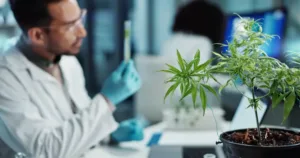
For example, a University of Newcastle report described lab comparisons between THC-containing cannabis and a CBD-enriched variety. In their lab tests on leukemia cells and pediatric brainstem glioma cells, the CBD-enriched variety was reported as more effective at killing cancer cells than the THC varieties.
That sounds powerful. However, it’s critical to understand what “lab tests” actually represent.
Lab Results vs Real Life: Our Mini Comparison
Lab research is a starting point, not a final answer.
Here’s why laboratory findings on cannabis and cancer cells cannot be directly applied to cancer treatment in people:
- Dose is different. Lab studies may use concentrations that are not realistic or safe for a human to reach.
- Human tumors are complex. Tumors interact with the immune system, blood supply, and surrounding tissue.
- Products vary. THC/CBD levels can vary widely across oils, edibles, and flowers – so results are hard to compare.
This is why cancer experts warn against assuming cannabis is a cancer-directed treatment.
ASCO’s 2024 guidance states clinicians should recommend against using cannabis or cannabinoids as a cancer-directed treatment unless it is part of a clinical trial.
What Does Current Cancer Research Say About Cannabis?
Research on cannabis and cancer is still in its early stages. Most of what we know comes from laboratory work, where scientists test cannabinoids on cancer cells in dishes or in animal models. These settings are useful for spotting possibilities, but they are a long way from telling us what happens inside a real person.
In those lab conditions, some studies suggest that cannabinoids kill cancer cells or slow their growth. That sounds encouraging, and it is worth studying further. But here is the part that often gets lost: a result in a controlled lab does not automatically carry over to the human body. So when someone asks whether marijuana kills cancer cells, the honest answer is that it has shown effects in the lab, but has not been proven in patients.
Human research is where things become far more limited. There are very few well-designed clinical trials looking at whether cannabis kills cancer cells directly, and the ones we have do not show that it controls or cures the disease. This is why major health bodies, including the CDC and the National Cancer Institute, are careful with their wording. They acknowledge the early signals while making it clear that the evidence is not there yet.
The most reliable conclusions we can draw today are about symptom relief, not about treating the cancer itself. As research continues, the picture may become clearer, but for now, it is best to read every bold headline with a calm and careful eye.
Does Weed Fight Cancer?
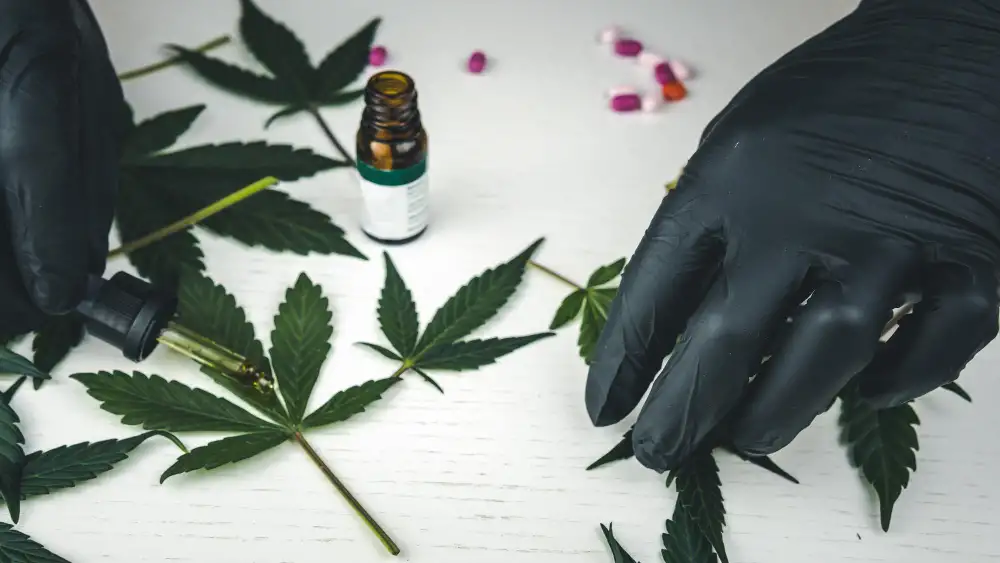
Till now, there’s no strong clinical proof that cannabis fights cancer the way standard treatments do (like surgery, chemotherapy, radiation, targeted therapy, or immunotherapy).
What we do have is:
- early lab evidence that cannabinoids can affect certain cancer cells in controlled settings
- limited human research that does not confirm cannabis controls or cures cancer
So if you are asking “does weed fight cancer”, the reasonable answer is that it has yet to be proven as a cancer treatment.
Does Cannabis Cure Cancer?
No. The phrase “cannabis cures cancer” is one of the biggest myths online.
- The CDC says studies have not shown that cannabis can cure cancer.
- The NCI notes cannabis is not FDA-approved as a cancer treatment.
- ASCO recommends against using it as cancer-directed treatment outside a trial.
If you see a product claiming it “cures cancer,” treat that as a major red flag.
Where Cannabis May Help: Supportive Care During Cancer Treatment
Even though cannabis killing cancer cells has not been proven in people, it may still have a role for some patients in symptom support, with medical guidance.
Chemotherapy nausea and vomiting
This is the area with the strongest medical guideline support.
ASCO’s 2024 guideline states that cannabis and/or cannabinoids may improve refractory chemotherapy-induced nausea and vomiting when added to standard anti-nausea medications.
The CDC also notes cannabinoids have been studied for managing some side effects of cancer and cancer therapies.
Sleep, stress, and discomfort
Many patients report using cannabis for sleep and stress. That does not mean it treats cancer or works for everyone. It simply reflects that people are seeking relief from day-to-day symptoms.
If you’re considering cannabis for sleep, anxiety, appetite, or pain, your first step should be to talk with your oncology team.
What Patients Should Know Before Using Cannabis
Cannabis is not harmless. Dana-Farber highlights real risks, including problems with memory and attention, psychosis in some cases, and safety issues like impaired driving.
Before using cannabis during cancer treatment, keep these points in mind:
- Do not replace your cancer treatment. Cannabis is not a proven cure.
- Tell your oncology team. This helps them watch for side effects and possible interactions.
- Be cautious with smoking. Smoke can irritate your lungs, and many cancer patients already have respiratory vulnerability.
- Start low and go slow (only with guidance). Especially with THC, which can cause anxiety, dizziness, or confusion.
- Avoid “miracle cure” claims. If it sounds too good to be true, it usually is.
How to Talk to Your Doctor About Cannabis (A Simple Script)
If you want a clearer conversation, try these questions:
- “I keep reading ‘does marijuana kill cancer cells.’ Is there evidence for my cancer type?”
- “Is cannabis safe with my chemo/immunotherapy medicines?”
- “What symptoms could it realistically help—nausea, sleep, appetite?”
- “What side effects should make me stop immediately?”
- “What form is safest for me (oral vs inhaled)?”
This keeps the focus on what matters: safety, symptom relief, and staying on your treatment plan.
Final Thoughts
It is understandable to hope the answer to “does marijuana kill cancer cells” is a simple yes.
But the current evidence does not support cannabis as a cancer cure in people.
What we have today is early lab research worth studying, plus clearer evidence that cannabinoids may help some patients with difficult symptoms like refractory chemo-related nausea and vomiting.
If you are considering cannabis, involve your oncology team and treat it as possible supportive care, not cancer treatment.